Multi-tenant buildings are becoming common across modern UK commercial developments. Business parks now host offices, retail units, and service providers under one location. Clear signage helps visitors quickly identify businesses without confusion or delays. Over sixty percent of new UK commercial buildings now support multiple occupiers. This growth increases demand for structured and shared external signage solutions. Multi-tenant monolith signs offer a clear and professional signage approach. They allow shared visibility while maintaining a strong site-wide visual identity. Property managers prefer signage that looks organised and easy to understand. Visitors benefit from clear navigation before entering busy shared locations. Monolith signs stand tall and visible from roads and pedestrian access points. They support branding while respecting the presence of multiple tenants. This balance makes them ideal for multi-tenant building signage needs. Shared sites require signage that avoids clutter and visual competition. Monolith formats provide clarity without overwhelming the surrounding environment. Their structured design supports professional impressions across commercial estates.
What Are Monolith Signs?
Monolith signs are tall freestanding structures installed near entrances or access routes. They usually display tenant names, directions, or site branding in stacked layouts. These signs remain visible from a distance due to their vertical height. Businesses rely on them for consistent visibility within shared locations. Monoliths work well for office parks and mixed-use developments. They often serve as primary corporate entrance signage for larger properties. Their solid structure makes them suitable for outdoor commercial environments. Panels can display multiple business names clearly and equally. This makes them effective directory monolith signs for shared buildings. Visitors quickly understand where they are and where to go. Unlike wall signs, monoliths do not depend on building facades. They function independently and remain visible despite architectural changes. Many developers prefer them for long-term signage planning. They also support future tenant changes without replacing entire signage systems. This flexibility strengthens their value for shared commercial properties.
Why Monolith Signs Work Well for Multi-Tenant Sites
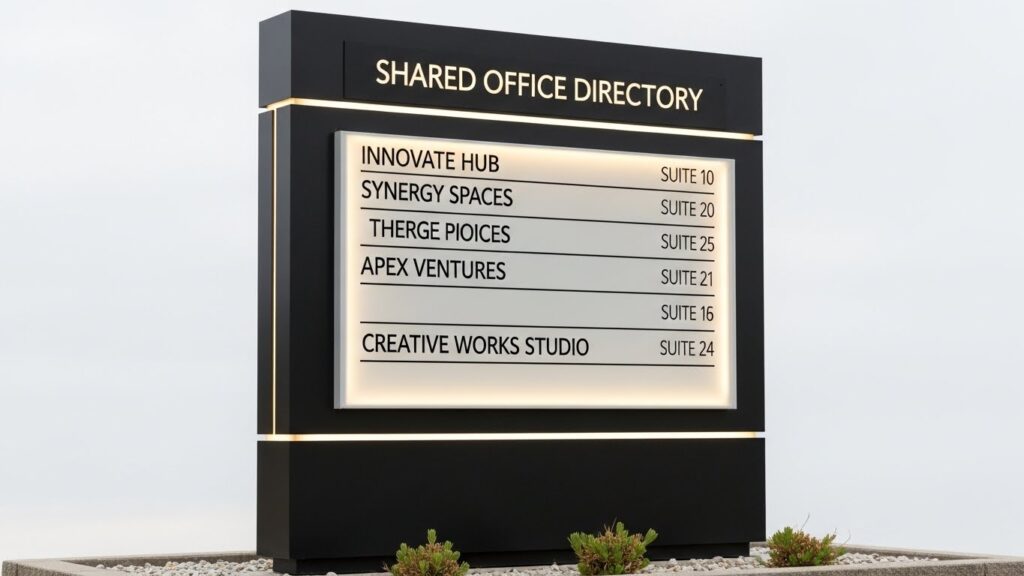
Poor wayfinding often confuses within shared office developments. UK surveys show visitor delays increase significantly when signage lacks clarity. Monolith signs solve this by grouping tenant information clearly. They present multiple occupiers within one structured signage unit. This reduces visual clutter across entrances and driveways. Freestanding formats improve readability compared to scattered wall signage. Shared office signs benefit from this centralised presentation. Visitors can read tenant listings without searching multiple building areas. This improves the arrival experience and reduces reception disruptions. Clear signage supports smooth movement across busy office parks. Monoliths also improve the professional image for all tenants involved. No single business dominates the signage hierarchy. This balance supports fairness within commercial property signage systems. Freestanding signage also adapts better to changing tenant arrangements. These advantages make monoliths ideal for shared commercial environments.
Common Locations for Multi-Tenant Monolith Signs
Placement strongly affects how effective signage performs across shared properties. Monolith signs are usually installed at main business park entrances. They often appear near vehicle access points and shared driveways. These locations ensure visibility before visitors enter complex sites. Signs may also appear near pedestrian access routes. This helps guide foot traffic smoothly toward the correct buildings. Many sites pair monoliths with external wayfinding signage. This creates a clear navigation journey from road to destination. Strategic placement avoids congestion and confusion at entry points. Monoliths often support office park wayfinding signs across larger estates. They work best when visible from multiple approach angles. Height and positioning ensure readability from passing traffic. Well-placed signs reduce unnecessary vehicle circulation inside properties. This improves safety and overall visitor experience. Correct positioning ensures signage performs its intended guidance role.
Design Considerations for Shared Office Monolith Signs
Design plays a vital role in shared signage effectiveness. Each tenant requires fair visibility within the overall structure. Font size hierarchy helps maintain balance across listings. Neutral colour palettes prevent brand conflicts between occupiers. Designers allocate panels carefully to avoid dominance by larger tenants. Consistency supports strong business park signage in UK standards. Monolith designs often align with broader site branding. Many developments combine monoliths with directory signage systems. This maintains visual continuity across the entire property. Clear spacing improves readability from a distance and in close range. Materials must support both aesthetics and durability. Designs often anticipate future tenant changes. Flexible panel systems allow easy updates without structural replacement. Good design ensures signage remains useful throughout lease cycles. Balanced layouts strengthen shared site identity for all occupants.
Planning Permission and Regulations in the UK
UK signage regulations influence monolith sign installation decisions. Many monolith signs require advertisement consent from local councils. Illuminated signage usually has more stringent approval requirements. The councils evaluate the height, lighting and visual effect carefully. Signs near highways receive additional scrutiny. Planning rules vary between councils and local planning authorities. Early compliance prevents costly delays and redesigns. Conservation areas impose stricter signage limitations. Residential proximity also affects signage approval outcomes. Property managers must consider these factors early. Compliance ensures monolith signage UK meets legal standards. Professional planning reduces risk during installation stages. Well-prepared applications increase approval success rates. Regulatory awareness supports smoother project delivery timelines. This approach protects investment and long-term signage performance.
Materials and Finishes for Business Park Monolith Signs
UK weather conditions demand durable signage materials. Aluminium and steel are common choices for structural strength. Composite panels offer lightweight durability and design flexibility. These materials resist wind, rain, and temperature changes. Powder coating improves surface protection and colour longevity. Acrylic overlays enhance visual clarity and finish quality. Durable materials reduce maintenance requirements over time. This suits long lease cycles within business parks. High-quality finishes preserve professional appearance for years. Many landlord signage solutions prioritise long-term durability. Low maintenance supports cost efficiency for property owners. Material choice directly impacts signage lifespan and appearance. Weather resistance ensures signage remains legible year-round. Strong materials protect branding investments across shared sites. This durability makes monoliths reliable for commercial environments.
Benefits for Property Owners and Tenants
Monolith signage offers value for both landlords and tenants. Landlords benefit from improved site presentation and perceived property value. Clear signage reduces visitor confusion and tenant complaints. Tenants gain visibility without applying for individual signage permissions. Shared signage simplifies branding management across properties. This supports smoother onboarding for new occupiers. UK leasing data shows signage improves tenant satisfaction. Properties with organised signage experience fewer navigation issues. Multi-tenant monolith signs reduce disputes over sign placement. Tenants enjoy equal exposure within a professional layout. Landlords benefit from reduced signage management complexity. Clear wayfinding improves visitor flow and safety. This enhances overall site functionality and reputation. Structured signage supports long-term occupancy stability. Both parties gain operational and visual advantages.
How Zero Signs Designs Monolith Signs for Multi-Tenant Buildings
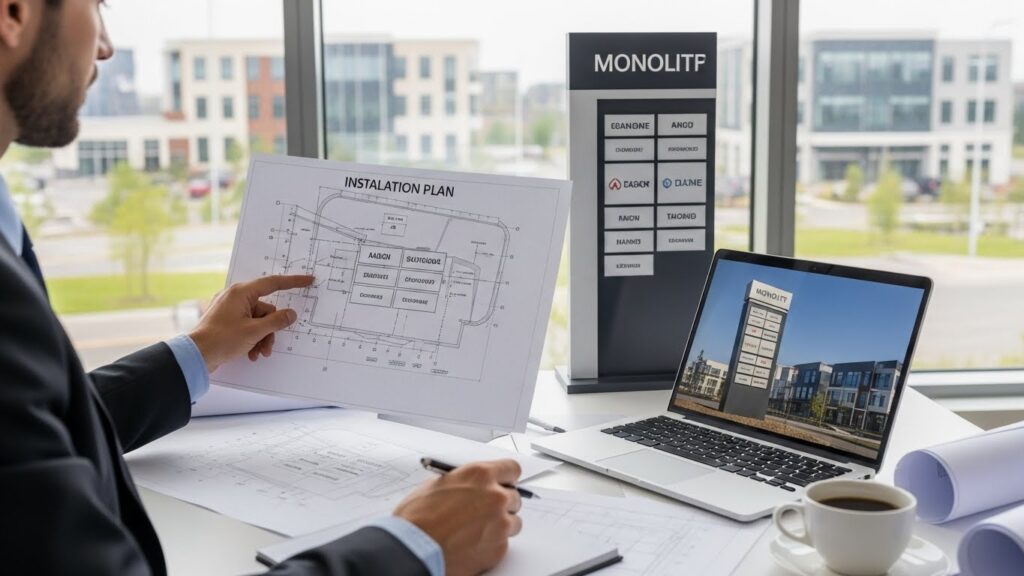
Effective signage begins with understanding site requirements. Tenant mix influences layout and panel allocation decisions. Designers assess vehicle flow and pedestrian movement patterns. Future occupancy changes influence flexible design planning. Integrated design ensures compliance with planning regulations. Fabrication focuses on durability and finish quality. Scalable designs allow easy tenant updates over time. This supports evolving multi-tenant building signage needs. Project coordination ensures accurate installation positioning. Clear communication reduces errors during production stages. Designers consider long-term maintenance requirements. This approach supports reliable performance across years. Many property managers explore broader signage options together. Comprehensive planning strengthens overall site wayfinding systems. Professional execution ensures signage meets commercial expectations.
Conclusion
Monolith signs provide clarity for multi-tenant commercial environments. They combine durability, shared visibility, and professional presentation. These signs support navigation across busy shared properties. UK commercial spaces increasingly rely on shared occupancy models. Monolith signage meets these evolving needs effectively. They remain a practical solution for modern commercial developments.
Property stakeholders often review monolith signage during early planning stages. Considering layout, materials, and regulations helps guide better signage decisions. Early assessment supports long-term clarity and professional site presentation.