Strong safety starts with clear signs on every project. Clear and compliant construction site signs UK protect workers and visitors daily. They also show that contractors respect strict UK safety laws. Every active site carries risks that demand visible warnings. Proper signage controls hazards that remain after safety measures. It supports safe behaviour and reduces avoidable accidents. Many projects still fail basic signage compliance checks. That failure increases legal exposure and reputational damage.
UK law treats signage as a serious safety duty. Standards like ISO 7010 ensure universal symbol recognition. British adoption under BS EN guidelines ensures consistent understanding. Clear symbols overcome language barriers across diverse workforces. Poor signage can lead to enforcement action and fines. The Health and Safety Executive monitors signage during inspections. Regulators expect durable, visible, and correctly positioned boards. Many enforcement cases cite missing or faded warning graphics.
Projects must display a compliant site entrance board. A visible CDM Regulations 2015 notice supports accountability. Understanding legal duties prevents costly project disruptions. Clear communication builds trust with workers and the public. Effective signage also demonstrates strong employer duty of care. This guide explains legal standards and best practice clearly. It helps contractors meet compliance without confusion or risk.
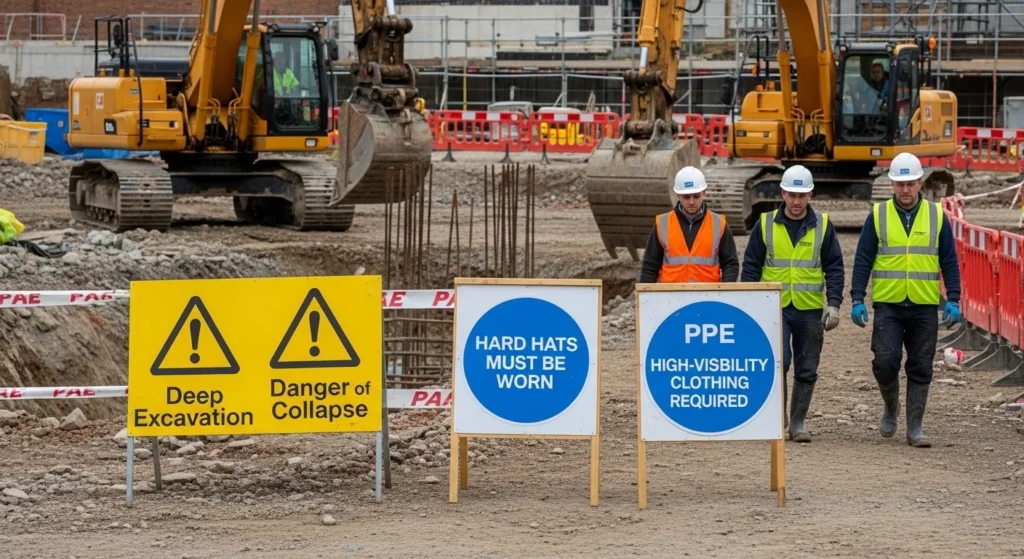
What Are Construction Site Signs and Why Does UK Law Require Them?
Construction signs warn about hazards that remain uncontrolled. They alert workers to moving vehicles and lifting operations. They also highlight excavation edges and overhead risks. The Health and Safety (Safety Signs and Signals) Regulations 1996 makes signage mandatory. Signs must appear where significant risk remains. They must stay visible, clean, and properly maintained. The CDM Regulations 2015 requires clear hazard communication.
Every duty holder must manage and monitor safety systems. That includes visible warnings across the full site area. Failure may trigger Health and Safety Executive enforcement action. Inspectors may issue an improvement notice quickly. Serious breaches may result in a prohibition notice. Authorities apply a significant risk threshold during inspections. Incorrect signs weaken employer duty of care defence.
Audits often check compliance against ISO 7010 BS EN standards. A missing warning sign creates unnecessary exposure. A faded symbol reduces clarity and increases danger. Each construction site hazard needs proper identification. Every duty holder must plan signage before work begins. Clear planning reduces risk and strengthens compliance records.
Types of Construction Site Signs Every UK Project Needs
Safety categories follow recognised colour coding standards. These colours help users understand meaning instantly. Common regulated types include the following essentials.
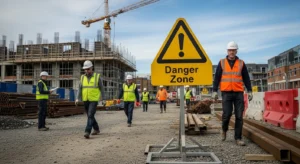
- Warning signs use yellow triangles with black borders.
- Mandatory signs use blue circles with white symbols.
- Prohibition signs use red circles with diagonal lines.
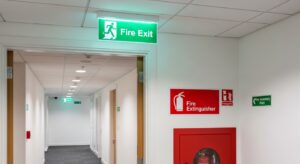
- Safe condition signs use green rectangles.
- Fire signs display white graphics on red backgrounds.
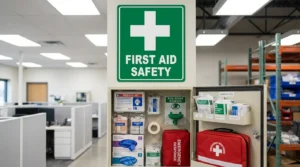
Projects require clear entrance information boards. Vehicle and pedestrian routes need directional traffic management signs. PPE requirement signs mark controlled safety zones. Emergency contact information must remain visible at all times. Visitor induction sign boards support controlled access management. The welfare facility signs direct workers to rest areas. First aid markers highlight medical support points clearly. These form the core construction site safety signs required.
Many sites also use building site signs UK variations. A compliant site entrance sign board UK improves first impressions. Clear placement supports overall site signage compliance UK. These measures meet CDM signage requirements 2015 expectations. They also reduce HSE construction signage enforcement UK risks. See examples of construction site signage we have installed across the UK in our portfolio.
CDM 2015 Rules and What Must Appear on Your Site Entrance Board
The CDM Regulations 2015 defines project notification duties. Regulation 6 outlines notifiable project thresholds clearly. Projects lasting 30 working days require notification. Projects with 20 simultaneous workers also qualify. A 500 person-days threshold triggers reporting obligations. The Health and Safety Executive requires F10 HSE notification submission. Principal contractor name and contact details must appear. The principal designer name must also remain visible. The site address should display clearly on boards. Emergency contact number details must remain readable. A construction phase plan reference supports accountability.
Hazard symbols should match ISO 7010 graphics. Required PPE must appear clearly on the board. Restricted zones must show prohibition messaging clearly. Emergency procedures require concise written explanation. First aid contacts must appear near emergency information. Entrance boards must remain legible in all weather. Many projects ask the site safety board what it must show. The answer always links to legal clarity and visibility. A clear board strengthens legally required building site signs strategy. Failure to display may breach notifiable project definition rules. Compliance protects contractors from negligence claims.
Choosing the Right Materials: Correx, Dibond and Rigid PVC Explained
Material choice affects lifespan and maintenance costs directly. Temporary projects often choose lightweight correx boards. Correx fluted polypropylene offers a three to six month lifespan. These suit fenced areas and short programmes. Rigid PVC panels offer versatile indoor outdoor medium-term use. They resist moisture and repeated handling damage. Dibond aluminium composite provides strong weatherproof performance. Dibond aluminium composite offers three to five years durability. Long projects prefer durable correx dibond construction signs options. UV-resistant inks protect graphics from sunlight fading. Anti-vandal laminate improves resistance to scratching and graffiti. Weatherproof outdoor signs reduce replacement frequency significantly.
Many contractors request multi-language construction site signs UK support. Clear pictograms meet multilingual duty expectations. The Health and Safety (Safety Signs and Signals) Regulations 1996 references communication clarity. Premium boards suit perimeter hoardings and hoarding graphics for construction sites. These boards often integrate hoarding graphics vinyl wrap finishes. Durable panels reduce long-term inspection and replacement costs. Material selection supports stronger site signage compliance UK outcomes.
Site Signage Compliance Checklist and Common Failures
Regular checks maintain visibility and compliance standards. Use this practical checklist to reduce oversight risks.
- Signs meet BS EN ISO 7010 pictogram standards.
- Entrance boards meet CDM 2015 display requirements.
- PPE signs appear at hazard entry points.
- Eye-level placement improves viewing distance clarity.
- Graphics remain unfaded and unobstructed.
The Health and Safety Executive often uses inspection checklists. Inspectors review sign fatigue from too many signs. They check for faded or damaged signs. They look for missing welfare facility signs. No multi-language provision may weaken communication clarity. Obstructed boards reduce hazard awareness significantly.
Poor placement undermines compliance responsibility of principal contractors. A sign audit programme supports long projects. Regular reviews prevent HSE enforcement surprises. Strong documentation supports principal contractor compliance responsibility.
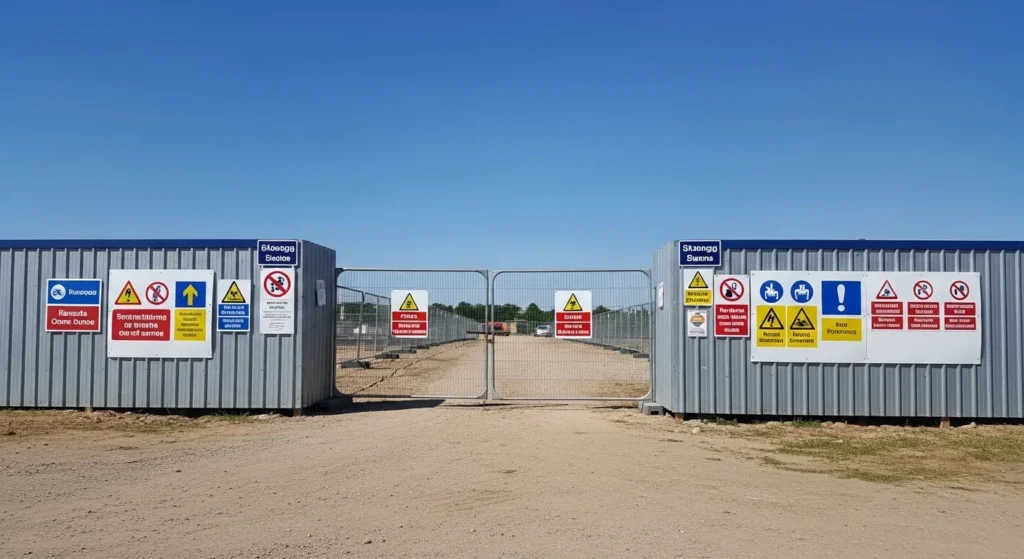
Order Complete Site Signage Packages From Zero Signs
Zero Signs UK supplies complete signage solutions. The company’s complete site signage packages support CDM 2015 compliant projects. Packages meet ISO 7010 compliant symbol standards. Zero Signs includes correx construction signs and dibond signs and also provide durable weatherproof outdoor signs.
Many boards remain UK-designed and manufactured. Teams can request bespoke site entrance board designs. The company also supplies multi-language signs when required. Industrial signage supports warehouses and logistics projects. Perimeter hoardings integrate strong branding and safety messaging.
Cheshire UK nationwide delivery supports projects everywhere. Packages reduce planning time for project managers. Zero Signs also prevents missing legally required building site signs. Consistent design strengthens overall site signs UK presentation.
Review your current construction site signs UK carefully today. Check whether boards meet current legal expectations fully. Confirm that symbols follow recognised colour standards. Ensure every site entrance sign board UK remains visible. Replace faded graphics before inspections occur. Upgrade to durable construction site safety signs materials.
Consider multi-language construction site signs UK for diverse teams. Prioritise compliance to avoid HSE construction signage enforcement UK action. Protect your workforce through clear communication systems. Choose reliable suppliers who understand CDM signage requirements 2015. Act now and secure complete site signage compliance UK protection.