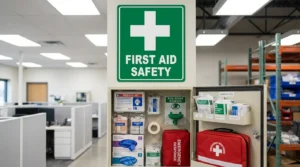
Every second counts when fire breaks out inside buildings. Clear fire safety signage guides people toward safety quickly. In the United Kingdom, signs form part of legal compliance. Business owners must follow strict fire sign requirements UK. The Regulatory Reform ( Fire safety ) Order (2005) sets basic and core duties.
Sign standards are defined as in the Health and Safety (Safety Signs and Signals) Regulations 1996. Design guidelines are aligned with BS EN ISO 7010 symbols. Each responsible person must protect occupants inside commercial premises.
Emergency exits and signage face frequent inspection during audits. Breaches of Article 14 ranked highest by March 2025. Proper fire safety signs reduce confusion and support evacuation plans.
What Is Fire Safety Signage?
Fire safety signs use clear symbols to protect building occupants. They mark escape routes and show fire equipment locations. They also guide actions during emergencies with simple instructions.
- Mark escape route directions clearly
- Identify each fire alarm call point
- Show locations of extinguishers and hoses
- Display a visible fire action notice
Green fire exit signs (green) guide people toward safety. Red fire equipment signs (red) show extinguishers and alarms. Blue fire door signs (blue mandatory) instruct correct door use.
Many buildings install photoluminescent signs for low light conditions. Design standards follow BS 5499 guidance. Clear signage supports quick decisions during stressful events.
UK Legal Requirements for Fire Safety Signs
UK law sets clear UK fire safety legislation standards. Two governing regulations define employer and duty holder obligations. Each business must complete a suitable fire risk assessment.
The Regulatory Reform (Fire Safety) Order 2005
The Regulatory Reform (Fire Safety) Order 2005 governs fire safety nationally. Many call this rule the RRO 2005. It applies across England and Wales workplaces. The duty holder must reduce risks inside buildings. This law covers fire safety in commercial premises clearly.
Article 14 focuses on safe means of escape. Exits must lead toward a secure place of safety. The fire risk assessment must remain suitable and updated. Clear signs ensure routes stay obvious to occupants.
Health and Safety (Safety Signs and Signals) Regulations 1996
The Safety Signs and Signals Regulations 1996 sets visual standards. These rules require standardised colour coding across workplaces. Signs must meet clear pictogram requirements for understanding. Most designs ensure BS EN ISO 7010 compliance.
Employers must follow strict workplace signage duties daily. These rules support strong fire safety sign regulations nationwide.
Who Is the Responsible Person?
The responsible person fire safety role carries legal accountability. This person may be an employer or building owner. Sometimes a landlord or facilities manager holds responsibility. They must mark fire escapes and equipment clearly. They must always maintain signs in safe condition. Authorities may issue enforcement notices or fines. A fire safety enforcement officer may inspect compliance.
What Fire Safety Signs Does Your Business Need?
Business owners often ask, what fire safety signs do I need?. The answer depends on building size and layout. Common fire safety signs for business fall into categories.
- Fire action notice (mandatory for all premises) displayed clearly
- Fire exit signs (green, running man, directional arrows) installed properly
- Fire door signs (fire door keep shut, fire door keep locked shut, automatic fire door) fitted correctly
- Fire equipment signs (fire extinguisher ID, fire alarm call point, fire hose reel, dry riser) placed visibly
- Warning signs like no smoking or flammable materials
- A clear fire assembly point sign outside buildings
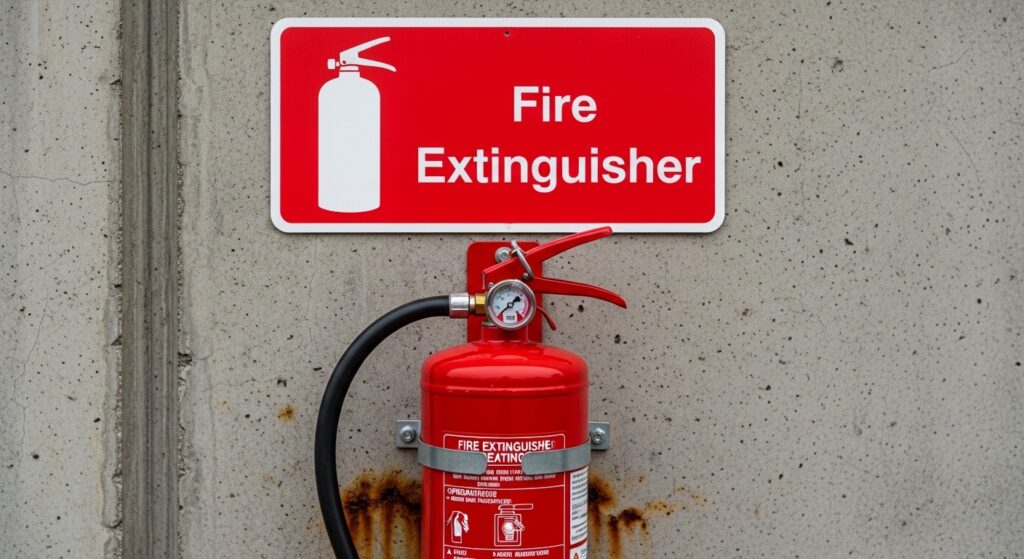
Each fire extinguisher sign must sit above equipment. Every fire alarm call point sign must remain visible. A fire door keep shut sign prevents smoke from spreading. These examples explain fire exit sign requirements clearly.
Standards such as BS 5499 fire signs guide sizing rules. This guidance supports fire exit sign types and legal requirements. Proper selection improves full fire signage compliance.
Where to Place Fire Safety Signs
Correct fire sign placement rules matter greatly. Signs must appear above or near exit doors. Install them at corridor intersections and decision points. Place signs at every change of direction. Add signage at every change of level.
Follow mounting height (2.0m above doors, 1.7m on walls) guidance. Ensure clear viewing distance from common routes. Meet all illumination requirements under emergency lighting.
Consider low-level signs for smoke conditions carefully. Follow BS 5499 Part 4 guidance strictly. These rules reflect illumination requirements for fire exit signs.
Fire Signage Inspection and Maintenance
Ongoing checks support strong fire signage compliance.
- Teams must perform a regular periodic review.
- Inspect photoluminescent sign maintenance during audits.
- Carry out frequent obstruction checks near exits.
- Maintain clear sign legibility at all times.
- Replace damaged or faded signs immediately.
- Align inspections with fire risk assessment review cycles.
- Follow BS 5499 Part 10 recommendations.
- Record findings inside the fire safety manual.
Common Fire Signage Violations and Penalties
Inspectors often find missing fire exit signs. They also report blocked escape routes frequently. Incorrect arrows create confusion during evacuations. Outdated signage may fail new layout checks. These issues lead to fire signage penalties UK.
Authorities may issue an improvement notice first. Serious cases result in a prohibition notice. Courts may impose an unlimited fine. Severe breaches allow up to 2 years imprisonment.
Penalties follow Article 32 RRO 2005 guidance. Authorities apply strict HSE enforcement powers. These findings mirror construction site safety sign requirements reviews.
Fire Safety Signage Compliance Checklist
Use a simple checklist format for clarity. The checklist given below supports full compliance with regulations.
- Completed and updated fire risk assessment up to date
- Fire exit signs on all escape routes installed
- Directional signs at every route change
- Fire door signs on both sides displayed
- Fire equipment signs above extinguishers positioned
- Photoluminescent or illuminated signs installed
- A clear regular inspection schedule recorded
- Confirm each fire action notice displayed properly
Professional Fire Signage Installation by Zero Signs
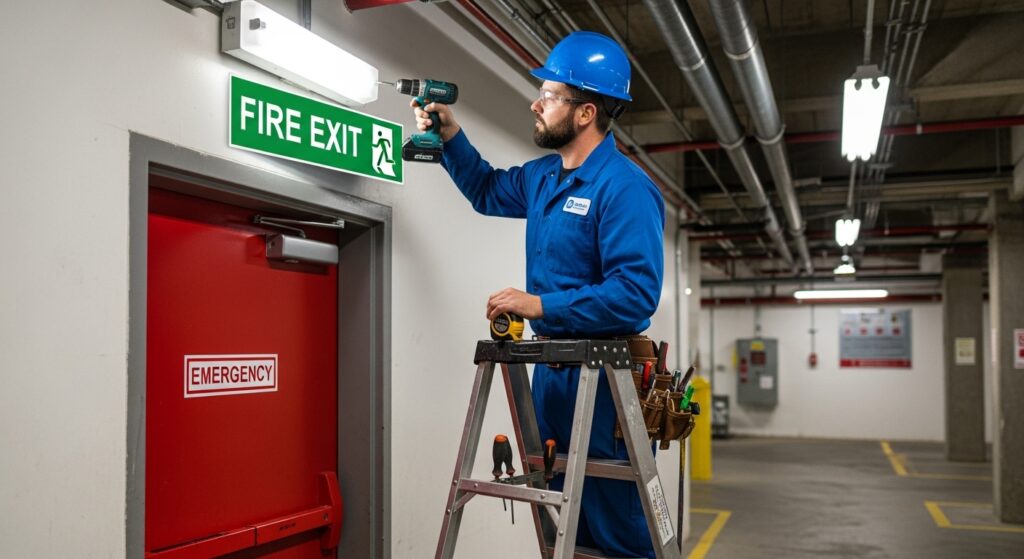
Correct installation supports reliable evacuation performance. Zero Signs provides expert solutions nationwide. The company operates from Cheshire UK. Zero Signs designs custom fire safety signage for many industries. All products remain BS EN ISO 7010 compliant.
The company also creates tailored bespoke fire signs. Zero Signs’ team supports projects from design to installation. The company supplies clear commercial fire signs UK solutions. Choose Zero Signs for fully compliant fire and industrial signage. Request a fast and simple free quote today.[ Get a Free Quote for Professional Fire Safety Signage ]