Finding the right place quickly matters more than most businesses realise. People often feel stressed inside unfamiliar buildings or busy commercial spaces. In the UK, studies show nearly seventy percent of visitors feel anxious when navigation feels unclear. Confusing layouts create frustration before customers even reach their destination. This frustration silently affects how people judge a business.
Well-designed signs remove this stress instantly and create calm movement. Clear directions help people feel welcomed instead of lost. Effective signage saves time, improves mood, and shapes first impressions strongly. Businesses that invest in navigation often see happier visitors and smoother daily operations. This quiet guidance plays a powerful role in shaping the overall visitor experience.
What Are Wayfinding Signs?
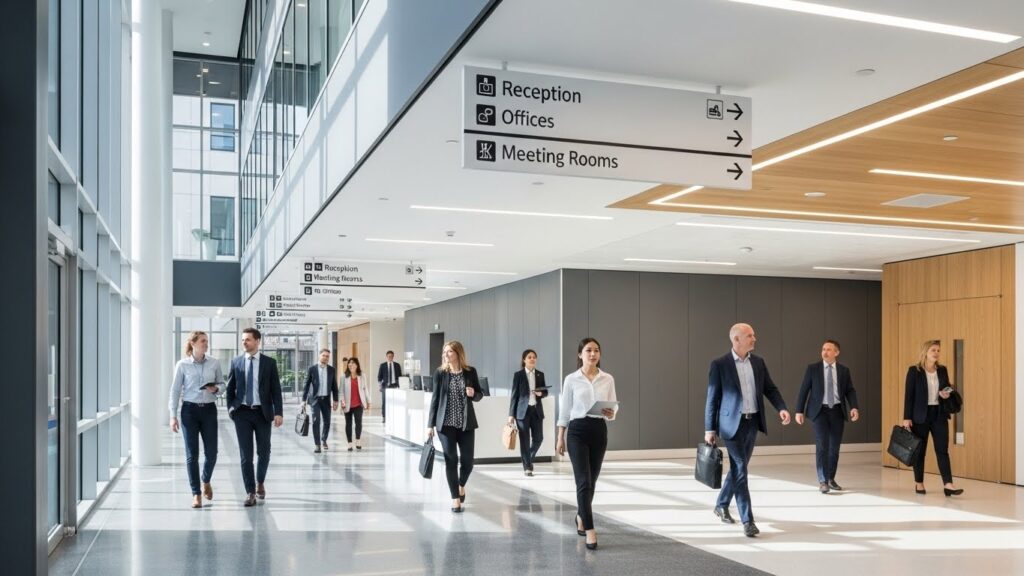
Wayfinding signs direct individuals in physical spaces by means of simple visual symbols. These symbols help the visitors in understanding their current location and the direction they need to take. The symbols consist of arrows, directories, symbols, and location markers. Each element works together to form a navigation system.
In large or complex buildings, guidance becomes especially important. Shopping centres, hospitals, offices, and event venues often confuse first-time visitors. Structured systems like directories and directional layouts solve this problem. Clear guidance reduces the need for verbal directions. Well-planned customer navigation signage supports smooth movement without confusion or hesitation.
How Customer Navigation Signage Improves Visitor Experience
Clear navigation creates confidence in every environment. Visitors move freely when signs guide them properly. They spend less time searching and more time enjoying the space. Calm movement improves comfort and overall satisfaction.
UK retail insights show that easy navigation increases dwell time. Customers who feel confident stay longer and explore more areas. This behaviour increases engagement and purchasing opportunities naturally. Clear signage also reduces interruptions for staff members. Teams can focus on service instead of repeated directions. Effective clear navigation signs quietly enhance every customer interaction.
Key Features of User-Friendly Wayfinding Signs
Effective wayfinding relies on simplicity and visual clarity. Signs must communicate information instantly without effort. Large fonts improve readability from a distance. Strong colour contrast improves visibility under different lighting conditions.
Placement also plays a major role in navigation success. Signs work best at entrances, junctions, and decision points. Consistent design helps visitors recognise patterns quickly. Repeated symbols reinforce understanding across the space. These principles define truly user-friendly signs that guide visitors smoothly without confusion.
Many UK public buildings now follow structured guidance to improve visitor flow. Consistency across all signs improves trust and comfort. A well-planned system prevents overcrowded walls and mixed messaging.
The Impact of Wayfinding on Different Environments
Wayfinding influences experiences differently across environments. In retail spaces, it encourages exploration and browsing. Customers feel free to move confidently between sections. This comfort increases engagement and time spent inside stores.
In healthcare spaces, navigation reduces anxiety significantly. Hospitals already create emotional stress for many visitors. Clear routes help patients reach appointments calmly and on time. Offices benefit from improved internal flow and punctuality. UK workplace studies show improved navigation reduces late arrivals noticeably. These improvements highlight the value of indoor wayfinding systems across multiple industries.
Accessibility and Inclusive Wayfinding Signage
Inclusive signage ensures everyone navigates comfortably and independently. This includes tactile lettering, braille elements, and clear pictograms. Accessible height placement helps wheelchair users and children. Strong colour contrast supports people with visual impairments.
In the UK, inclusive navigation aligns with equality standards and accessibility guidance. Well-designed systems improve dignity and independence for all visitors. These features enhance experiences without reducing visual appeal. Thoughtful accessibility signage UK solutions benefit everyone, not only those with specific needs. Inclusive design strengthens trust and brand reputation quietly.
Common Wayfinding Mistakes That Harm Visitor Experience
Poor signage design causes confusion and frustration quickly. Overcrowded signs overwhelm visitors instead of helping them. Inconsistent symbols force people to stop and rethink directions. Poor placement causes missed turns and backtracking.
Another mistake involves adding signs without a clear system. Random placement creates visual noise instead of guidance. UK visitor feedback often links poor navigation to negative impressions. Even strong services suffer when navigation feels stressful. Avoiding these mistakes protects brand perception and supports smoother customer journey signage throughout the space.
Best Practices for Designing Effective Wayfinding Systems
Successful wayfinding begins with understanding visitor movement. Designers study how people enter, pause, and decide directions. Clear routes emerge from observing natural behaviour patterns. Signs then support these movement paths logically.
Materials also matter in busy environments. Durable finishes ensure long-term visibility and safety. Lighting improves readability in darker areas or evening hours. Many UK businesses now include navigation planning early. This approach prevents rushed solutions later. Strong commercial wayfinding solutions result from thoughtful planning and user-focused design.
Why Choose Zero Signs for Wayfinding Signage in the UK?
UK-based specialists understand local layouts and visitor behaviour well. They also understand compliance requirements and accessibility expectations. Professional providers like Zero Signs often focus on tailored systems. Zero Signs’ designs match the building’s character and branding goals.
This approach creates harmony between signs and surroundings. Consistent visuals strengthen brand recognition subtly. Thoughtful systems improve flow without overpowering interiors. Zero Signs often offers consultation support for planning needs. The company’s focus on clarity and longevity supports effective wayfinding signage UK solutions.

Conclusion
Effective wayfinding signs quietly improve experiences across every environment. They reduce stress, save time, and create positive impressions. UK businesses benefit from improved flow, accessibility, and operational efficiency. Visitors remember spaces that feel easy and welcoming. Clear navigation supports comfort long after people leave the building.
Improve how visitors experience your space with professional guidance. Explore tailored branded wayfinding signs designed for UK environments. Speak with specialists who understand clarity, flow, and compliance. Create navigation that supports confidence, comfort, and positive impressions every day.