Safety in the workplace in the UK is a critical issue that every employer takes seriously since the lives and operations of any organization always rely on it. The businesses cannot afford to overlook risks since working under unsafe conditions raises accidents, delays work, and damages employee trust and reputation of the company. Hundreds of thousands of injuries in the workplace are reported in the UK annually, and many accidents can be directly traced back to the lack of awareness and clear statements. The installation of visual signs in workplaces leads to the workers knowing about risks more quickly, acting according to rules, and reacting appropriately to possible incidents. Good industrial signage assists individuals to work safely, act cautiously and stay aware in busy and demanding workplace situations where any mistake can lead to serious consequences.
Clear signs guide movement, prevent confusion, and remind workers about safe working behaviour at every point of the job. When employees observe the instructions that are posted in their surroundings, they respond faster and more efficiently without fear of knowing what to do. This ensures that workplaces are safer, calmer and controlled by employees, managers, visitors and contractors of all kinds of industries. That is why smart safety planning in the UK always includes effective industrial safety signage as a main safety tool. Good signage becomes part of daily work life and constantly supports safer behaviour without needing constant verbal reminders.
What Is Industrial Safety Signage?
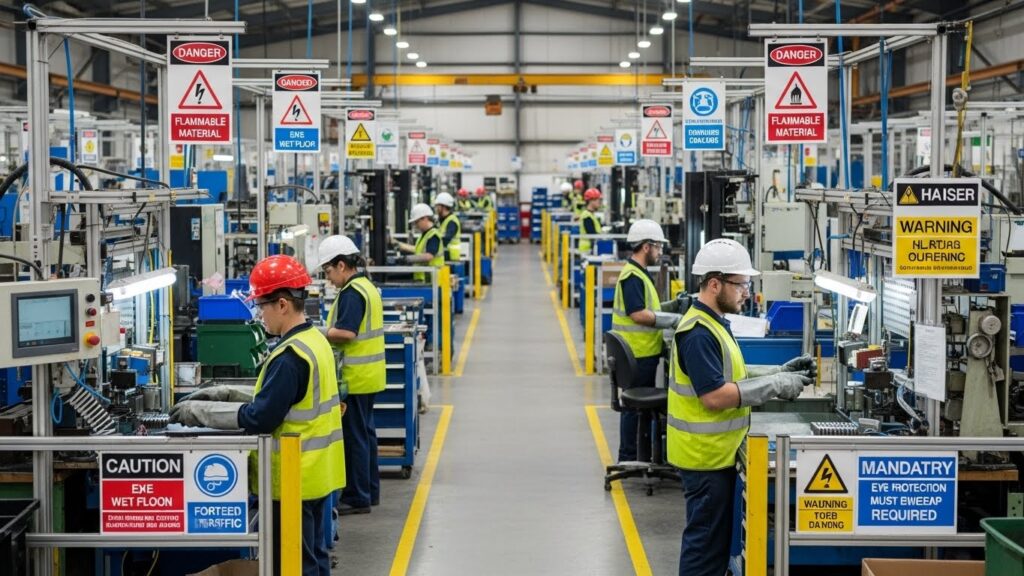
The term industrial safety signage refers to the visual communication tool at the factory, warehouse, workshop, production facility, logistics centre, construction site, and most other workplaces. These signs communicate threat, directions, prohibitions, safe routes, and emergency directions in a simple and easily understandable manner. They make all workers aware of what is safe, what is hazardous, and what they should do at once.
These workplace safety signs cover many important safety needs, including hazard explanation, required protective actions, restricted behaviour, and important safety directions. In UK workplaces, signs must follow recognised standards so workers understand them easily, even when moving between different locations. Signs do not depend on language skills alone because strong safety design uses colour, shape, and symbols that everyone recognises. Proper industrial hazard signs work like silent supervisors on site, guiding behaviour every second of the day and protecting people when situations change quickly.
How Safety Signage UK Standards Protect Workers
In Britain, safety signage UK follows clear legal standards to protect workers and employers. These standards include safety sign regulations UK guidelines, Health and Safety rules, and recognised European and international standards for clarity and design. These rules ensure consistency so everyone across the country recognises the same meanings for colours, shapes, and safety symbols at once. Due to this standardised and consistent system, employees who move to different locations never feel lost or unsure of what a sign communicates.
Workplaces are safer and more organised when employers adhere to HSE compliant signage. Signs are not there merely to adorn walls, but to instruct behaviour and avoid errors. Workplaces that have a good safety culture apply well-organised visual safety systems and have fewer injuries, fewer unsafe acts, and more awareness. Effective workplace safety signs decrease misunderstanding, minimise confusion, and establish trust between team members working around dangerous machinery, vehicles, height risks, chemicals, and heavy materials.
Types of Industrial Signage Used in the Workplace
Industrial environments rely on different types of signage working together as a complete safety communication system. All the signs are different but they contribute to a safe well-informed workplace where all the individuals are aware of what is required.
- Hazard warning signs are used to warn individuals of possible dangers, which may include electricity, chemicals, vehicles, and machinery, heat, slips or structural hazards.
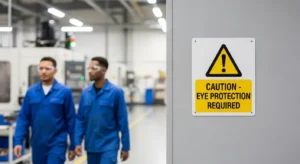
- Mandatory safety signs tell workers what to do, including putting on helmets, goggles, gloves, or other protective equipment.
- Warning and prohibition signs prohibit hazardous or forbidden behaviours like smoking, entering no-go areas or using the machines incorrectly.
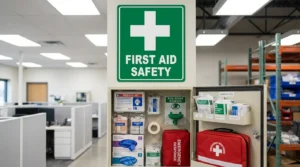
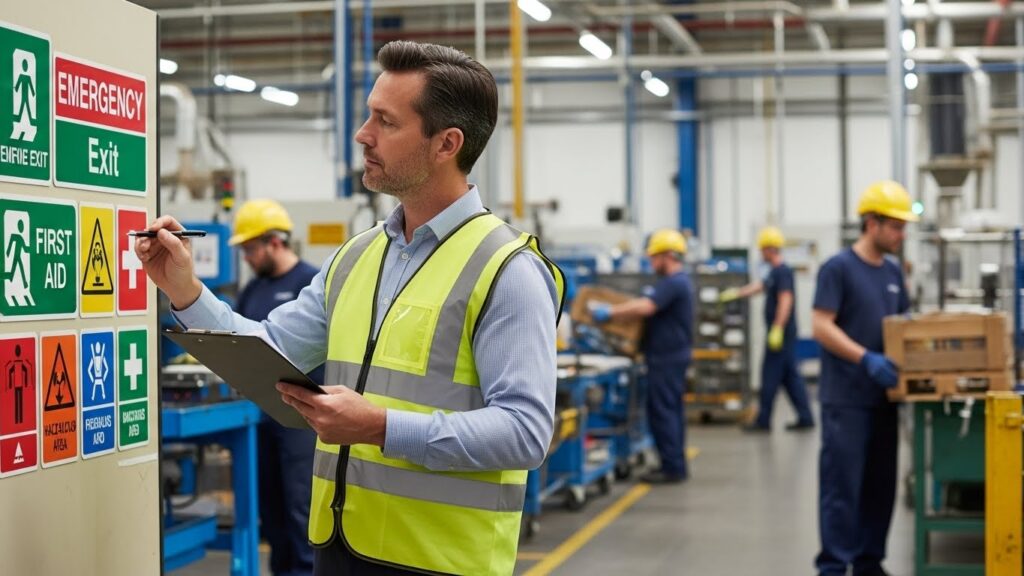
- Emergency and information signage supports safe movement by directing people towards exits, equipment, assembly points, or first aid help when needed.
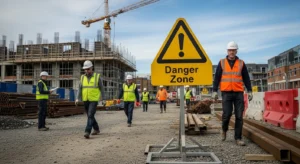
Many industries also use construction safety signage on building sites and factory safety boards in production environments to organise important information clearly. When workplaces use professional industrial safety signage, operations run more smoothly because people always see important instructions exactly when needed.
The Role of Health & Safety Boards in Accident Prevention
Health & Safety boards play a very important role in keeping workers informed, prepared, and aware in demanding industrial environments. These boards play the role of central information zones where workers can access crucial safety information whenever necessary. They generally contain evacuation, emergency contacts, incident processes, first aid, key safety notices, and frequent updates concerning risks.
Even in big industrial estates, in warehouses, factories, and busy working places, you can never talk alone to update everyone. Employees have different shifts, various tasks, and work in various locations and hence these boards can keep everyone updated. Well-maintained factory safety boards assist in ensuring enhanced communication between employers and employees and maintain safety vigilance every day. Feeling informed, workers can come up with stronger safety behaviours and minimise the risk of accidents.
How Industrial Signage Improves Compliance With UK Regulations
Industrial signage directly supports legal compliance in the UK because employers must show they take reasonable steps to protect workers. Clear HSE compliant signage helps demonstrate that employers informed workers about risks, expected behaviour, and safe actions. This reduces legal risk and proves responsible management. During inspections, clear signage often prevents penalties or improvement notices because inspectors see strong visual evidence of commitment to safety responsibilities.
Many businesses across industries now use structured safety signage UK systems to support wider safety strategies. Visible signs ensure workers remember procedures and laws, not only during training but during real daily tasks. This approach supports compliance in traditional industrial workplaces and even environments like logistics, warehousing, manufacturing, engineering, utilities, public operations, and shared environments where public and staff safety connect.
Key Design Features of Effective Safety Signage
Good industrial hazard signs do not emphasise on decoration but rather clarity. A good safety sign should be visible, comprehensible and strong to withstand severe conditions. High colour contrast makes workers recognise signs in the low-light or dust conditions. Universal symbols reduce language problems so everyone can understand messages without reading long text.
Durable materials resist weather, moisture, chemicals, impact, and general wear because industrial environments test materials every day. Size matters because workers must read signs safely from the right distance. Placement also plays a vital role because even the best workplace safety signs fail when hidden behind equipment or placed too high. Good signage reduces reaction time and helps workers make correct decisions faster in risky moments when quick action prevents injuries.
Common Mistakes to Avoid With Workplace Safety Signs
One common mistake involves placing too many signs in one area, which overwhelms workers and weakens attention. Another frequent issue is using damaged, faded, or outdated signage that loses trust and fails to communicate clearly. Poor placement creates a serious risk when hazard warning signs sit behind equipment or outside normal eye level. Sometimes workplaces forget to update signs when layouts, machinery, or processes change, creating confusing and dangerous messages.
Audits across safety signage in UK environments often identify signage problems early as signals of wider safety management weaknesses. When signs are wrong, inconsistent, or unclear, workers lose confidence in safety systems and begin ignoring warnings. This makes it vital for employers to review signage regularly, replace poor signs, and ensure every sign accurately matches real risks and instructions.
Why Choose Zero Signs for Industrial Safety Signage in the UK?
Businesses benefit from working with experienced professionals at Zero Signs who understand design, safety law, durability needs, and real workplace behaviour together. The skilled providers of industrial safety signage understand how to balance visibility, strength, clarity, and compliance requirements. The teams with industry knowledge also help businesses avoid costly mistakes while building stronger, safer work environments that support both productivity and protection.
Professionally designed HSE compliant signage supports trust, confidence, and compliance. Expert support helps employers stay aligned with safety sign regulations UK, ensures correct placement, and improves communication across teams. Businesses that choose knowledgeable signage partners, i.e., Zero Signs gain safer workplaces, stronger legal protection, and better safety culture reinforced through reliable visual guidance every day.
Conclusion
Industrial signage plays a powerful role in improving workplace safety across the United Kingdom by guiding behaviour and preventing dangerous mistakes. It reduces accidents, supports legal compliance, and strengthens everyday awareness among workers, visitors, and contractors. When signage remains clear, standardised, high quality, and well positioned, it becomes part of everyday working systems and supports safer decisions constantly.
Understanding how strong signage supports overall safety responsibility helps businesses build safer, smarter working environments for everyone involved. Reviewing existing workplace safety signs, checking alignment with safety signage UK standards, and working with Zero Signs ensures future safety improvements stay reliable as business environments continue to develop.