Drivers often encounter temporary hazards when roads undergo repair or construction. These situations require clear guidance for drivers, pedestrians, and construction workers. Proper signage for road works protects people and improves traffic safety. Construction zones often create hazards including narrowed lanes and shifting carriageways. Drivers need clear warnings before approaching these temporary traffic changes. Reliable road work signs UK help drivers slow down and follow safe routes. Authorities install signs to guide vehicles safely around construction activities. These signs help prevent collisions and reduce confusion during road maintenance. Local highway authorities manage a very large road system across England.
The Department for Transport reports over one hundred eighty-three thousand miles managed. Thousands of repair projects occur every year across this national network. This high level of activity requires clear temporary road signs UK. These signs inform drivers about hazards and new traffic instructions. They also help maintain smooth traffic movement during roadworks operations. Accident statistics highlight the importance of correct temporary traffic guidance. Several thousand injuries occur annually near temporary traffic management zones. These incidents often involve drivers approaching roadworks without proper awareness. Authorities therefore require visible temporary traffic signs UK for safety.
Contractors must install signs correctly before starting any construction work. The system relies on consistent visual design used across the country. These rules ensure drivers quickly recognise a roadworks road sign. Design standards also ensure safe placement during construction activities. Compliance standards include Traffic Signs Manual Chapter 8 guidance. Manufacturing standards also reference BS 8442:2015 for performance requirements. Legal regulations specify which designs appear within TSRGD 2016 temporary signs. Following these standards ensures drivers receive safe and consistent guidance.
UK Legal Requirements for Road Works Signage: TSRGD 2016 and Chapter 8 Explained
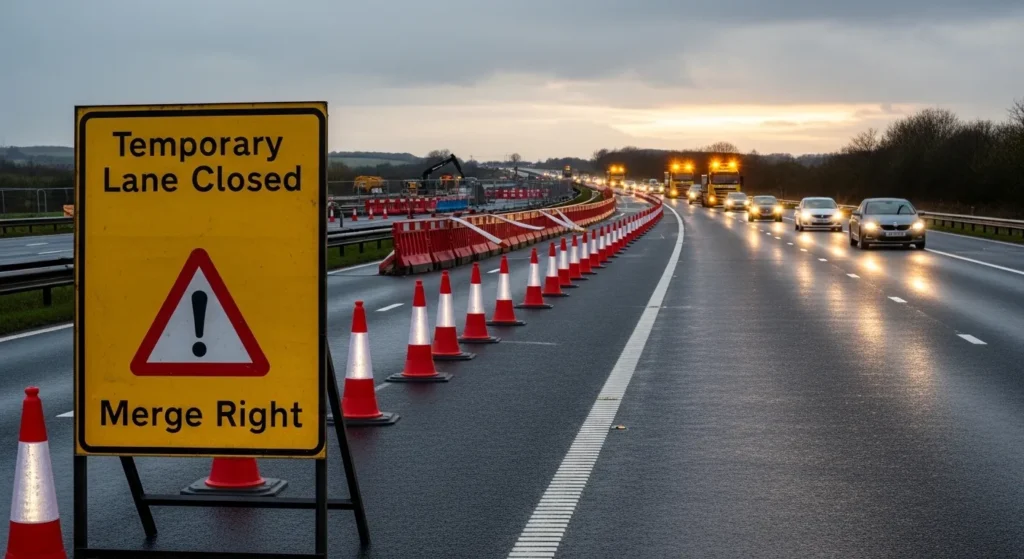
National law regulates the design and use of temporary traffic signage. Contractors must follow specific rules when installing road construction signs UK. The main legal framework is the Traffic Signs Regulations legislation. These rules appear in TSRGD 2016 temporary signs regulations. The legislation defines permitted colours, symbols, and placement requirements. Authorities enforce these regulations across public highways in the country. Consistency helps drivers recognise traffic warnings quickly and react safely.
Practical installation guidance appears in Traffic Signs Manual Chapter 8. This document explains correct traffic management during road works projects. It provides instructions for contractors managing temporary traffic environments. The manual explains safe working layouts and sign placement distances. Authorities expect contractors to follow this national guidance carefully. Legal compliance also connects with the New Roads and Street Works Act. This law regulates responsibilities during highway maintenance activities.
Contractors must follow rules protecting both workers and road users. Failure to follow guidance may create contractor liability issues. Highway authorities monitor installations to ensure public safety standards remain high. Correct temporary traffic signs UK support safe and lawful traffic control. For the full picture of on-site safety signage, read our complete guide to construction site signs.
TSRGD 2016 Schedule 13 — Which Signs Are Legally Permitted at Road Works
Schedule thirteen lists signs allowed for temporary road works situations. Authorities permit only approved designs within TSRGD 2016 temporary signs. These signs follow consistent shapes, colours, and symbols. Contractors must install only prescribed signs listed within legislation. Common authorised examples include warning and diversion indicators. Examples include the road work ahead sign UK design. These signs warn drivers about upcoming construction hazards.
Common authorised roadworks signs include the following examples:
- Road works ahead warning signs.
- Temporary speed limit boards.
- Lane closure direction symbols.
- Diversion route indicators.
Using unauthorised designs may invalidate traffic management plans. Illegal signage can lead to enforcement action from highway authorities. Only prescribed temporary signs may appear on public highways legally. Rules require a remove-by date printed on the back panel. Signs must remain no longer than three months after work completion. Authorities consider non-prescribed signage unlawfully placed on highways.
The ‘Remove-By Date’ Rule Most Contractors Get Wrong
Temporary signage must remain only during active hazards. Many contractors forget to remove signs after work completion. Authorities require clear TSRGD 2016 temporary signs removal procedures. Signs left unnecessarily can confuse drivers and reduce warning credibility. Drivers may ignore genuine warnings after seeing outdated roadworks signs. This situation increases risk around real construction hazards.
Highway authorities can issue enforcement notices to responsible contractors. Local residents may also report unused temporary street signs UK. Councils have legal authority to remove overdue signs themselves. Regulations require a remove-by date printed behind the sign. Rules normally limit signs to three months after work completion. These procedures ensure accurate roadworks sign UK communication remains reliable.
Types of Road Works Signs: Warning, Regulatory and Informatory Signs Explained
Temporary road works signs fall into three major functional groups. Each group helps drivers understand hazards and required behaviour quickly. Clear structure improves recognition of road construction signs UK. Drivers identify warnings faster using consistent design systems.
Three major categories include the following sign groups:
- Warning signs alert drivers about hazards ahead.
- Regulatory signs instruct drivers about legal restrictions.
- Information signs explain traffic changes or diversions.
This system helps drivers respond correctly to temporary road traffic signs UK. Warning symbols indicate hazards requiring increased driver attention. Regulatory symbols communicate legally enforceable instructions. Information signs guide vehicles through changed traffic routes. Construction areas sometimes require additional signals and barriers. These may include portable traffic control equipment. For branding and safety at site perimeters, see our guide to hoarding signs and perimeter signage for construction sites.
Entities associated with this system include common roadwork indicators. Examples include the temporary traffic lights sign used during lane closures. Other examples include the road work ahead sign UK symbol. Traffic signals and stop-go boards also support traffic management.
Warning Signs for Road Works — Yellow Triangle Signs and When to Use Them
Warning signs represent the most visible roadworks road sign category. These signs usually appear as yellow triangles with black pictograms. Drivers easily recognise these shapes even at long distances. They provide early notice about hazards ahead. The road work ahead sign UK remains the most common warning indicator. Drivers also see warnings about narrowed carriageways or uneven surfaces.
Typical hazard warnings include the following examples:
- Road construction ahead signs showing worker pictograms.
- The road narrows both sides indicators.
- Loose chippings hazard warnings.
- Uneven road surface warnings.
These signs allow drivers to reduce speed before reaching hazards. Correct spacing follows rules described in Traffic Signs Manual Chapter 8. Authorities recommend advance warning distances based on road speeds. Following these rules ensures safe driver response times.
Regulatory Signs at Road Works — Speed Limits, Lane Closures and Prohibitions
Regulatory signs provide legally enforceable traffic instructions. Drivers must follow these rules when entering roadworks areas. These signs usually appear with red circles and black symbols. Temporary speed limits commonly appear within construction zones. These signs reduce risk around workers and equipment.
Common regulatory examples include the following instructions:
- Temporary speed limit signs within red circular borders.
- Lane closed sign cones directing vehicles into safe lanes.
- Temporary no entry restriction indicators.
- Contraflow working instructions on dual carriageways.
Speed boards may display forty, fifty, or thirty mile limits. Authorities install these limits to reduce accident risks. Drivers must follow these limits within active work zones.
Temporary Traffic Lights and Stop-Go Boards
Narrow roads often require alternating traffic movement. Workers use control systems for safe single lane traffic flow. Two main solutions manage this type of temporary traffic movement.
Common traffic control systems include the following options:
- Portable traffic lights controlling vehicle movement automatically.
- Stop-go boards used by trained traffic marshals.
These systems support safe operation on narrow carriageways. They work well during construction affecting both traffic directions. Guidance appears within Traffic Signs Manual Chapter 8 instructions. Manufacturing standards also reference BS 8442:2015 compliance rules.
Retroreflectivity Grades for Road Works Signs: R1, R2 and R3B Explained
Roadworks signs must remain visible in darkness or rain. Reflective materials help headlights illuminate important safety signs. Performance standards define different reflective brightness levels. These performance categories fall under R1 R2 R3B retroreflective grade classifications. Each grade suits different road environments and vehicle speeds.
The three main reflective grades include the following classifications:
- R1 grade designed for lower-risk urban environments.
- R2 grade designed for rural roads and higher speeds.
- R3B grade designed for high-speed highways.
These reflective materials meet BS 8442:2015 performance standards. All temporary traffic signs UK must use reflective materials. Manufacturers produce flexible roll-up signs for easy transportation. Rigid signs also appear with aluminium or composite back panels.
R1 and R2 Grade Signs — Urban and Rural Roads
Urban roads usually use lower reflective intensity materials. Many projects install signs with R1 R2 R3B retroreflective grade classifications. R1 signs suit slower streets with thirty to forty mile speeds. These materials meet the minimum BS 8442:2015 performance requirements.
R2 materials provide brighter reflection for rural highways. Drivers can recognise warnings earlier on poorly lit roads. Contractors often mount these signs using aluminium backing boards.
R3B Microprismatic Signs — Mandatory on High-Speed Highways
Motorways require the highest reflective visibility standards. High speed traffic needs early hazard recognition. R3B microprismatic materials provide extremely strong light reflection. These materials fall under R1 R2 R3B retroreflective grade classification systems. They appear on major dual carriageways and motorway environments.
Vehicles commonly travel sixty to seventy miles per hour here. Authorities require compliance with Traffic Signs Manual Chapter 8 specifications. Contractors remain responsible for purchasing compliant reflective materials.
Where to Place Road Works Signs and How to Order Compliant Signage
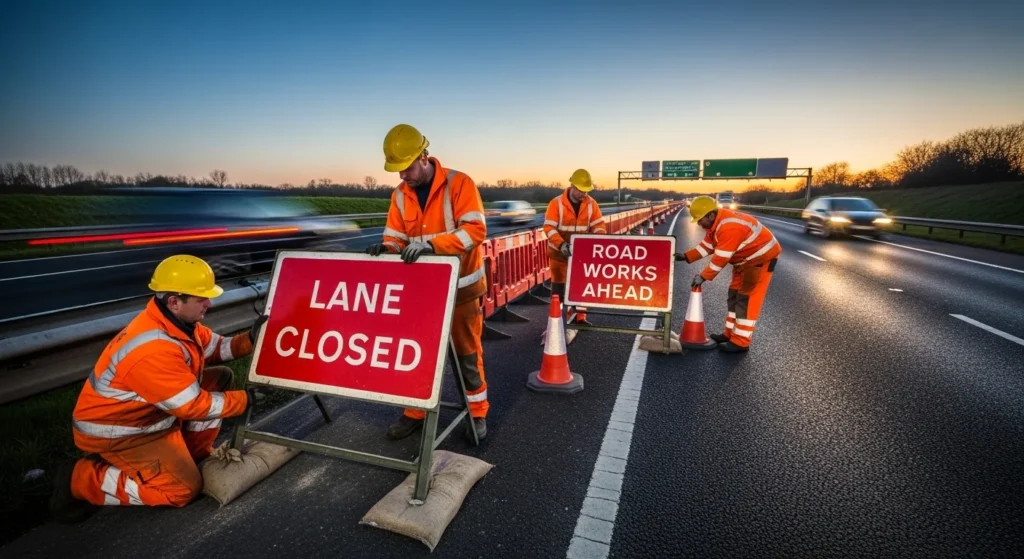
Correct positioning improves visibility of signage for road works installations. Drivers must see warnings early enough to change driving behaviour. Authorities define advance placement distances based on road speeds. These rules ensure drivers recognise hazards before reaching work zones.
Clear visibility also requires unobstructed sightlines for approaching traffic. Contractors must secure signs against wind movement. Ballasted frames help maintain stable sign placement during construction.
Correct sign placement generally follows several safety principles:
- Install advance warning signs before reaching the work zone.
- Place signs near lane closures and speed reductions.
- Repeat signs regularly along extended construction areas.
- Position signs at direction changes or diversions.
Reliable suppliers like Zero Signs UK manufacture compliant temporary road signs UK products. The professional manufacturers follow TSRGD 2016 temporary signs design rules. The company also applies reflective materials meeting BS 8442:2015 standards.
Some suppliers produce flexible roll-up temporary road traffic signs UK. Rigid options also appear using aluminium composite backing boards. For a full overview of durable sign solutions, read our guide to industrial signage for construction and site safety. Businesses may order compliant signage through Zero Signs UK.
Safe roads require clear and compliant construction warning systems. High quality signage for road works improves driver awareness and worker safety. Reliable road work signs UK ensure legal compliance and traffic management success.
Professionally manufactured temporary road signs UK follow strict safety standards. Choose the trusted supplier Zero Signs UK producing durable temporary traffic signs UK for construction projects.