
Parking in the UK often feels stressful without a clear understanding of the displayed instructions. Many drivers enter car parks unsure about limits, payments, or permissions required.
Car park signs exist to remove confusion and guide drivers safely. From busy city centres to quiet residential streets, signs control parking behaviour. Recent transport surveys show parking fines affect many UK drivers yearly.
Most penalties happen because signs were misunderstood or accidentally. Parking signs UK are designed to inform, not punish, drivers. Reading them carefully can save money, time, and frustration. Car park signs UK follow standard formats so drivers recognise rules quickly. Understanding them improves parking confidence and reduces unnecessary mistakes.
Learning these signs helps drivers park legally in unfamiliar locations. Every sign gives specific instructions that must be followed. Missing small details often leads to unexpected penalty charges. Knowing the meaning of each sign supports safer and smoother parking experiences.
Why Understanding Car Park Signs Matters
Parking signs control how shared spaces are used fairly. They ensure access remains available for everyone. Car park signs help manage congestion in busy areas. They guide drivers about timing, payment, and access restrictions. Ignoring signs often results in expensive fines.
Many UK drivers lose money due to misunderstanding simple instructions. Parking signs UK protect disabled users, residents, and businesses. Signs prevent misuse of limited spaces. A clear understanding saves time when choosing where to park. Drivers avoid walking long distances after incorrect parking decisions. Car park signs UK also improve safety for pedestrians and vehicles. They reduce conflict between road users in crowded areas. This is especially important in areas used by commercial vehicles, where clear HGV parking and fleet signage help maintain safety and compliance.
Following signs helps traffic flow smoothly. Signs also support emergency access when needed. Understanding signage builds responsible driving habits. It also reduces stress during daily travel. Learning signs once helps drivers everywhere in the UK.
The Blue “P” Parking Sign
The blue P sign is the most recognised parking symbol in the UK. It clearly shows an area intended for parking use. However, the P sign parking does not guarantee free access. Additional information always applies near this sign. Nearby plates explain charges, time limits, or restrictions.
Drivers must read all displayed instructions carefully. Many assume the sign means unrestricted parking. That assumption often leads to penalties. Car park signs work together, not individually. The blue symbol only confirms parking is allowed. It never explains conditions by itself.
Parking signs UK always include supporting details. This matters even more for branded cars, as professional vehicle wraps for business visibility often attract closer enforcement attention. Some blue signs apply only during certain hours. Others require payment or permits. Ignoring smaller signs can confuse. The blue P sign appears in public and private locations. Drivers should always look for extra information nearby. Understanding this sign avoids costly misunderstandings.
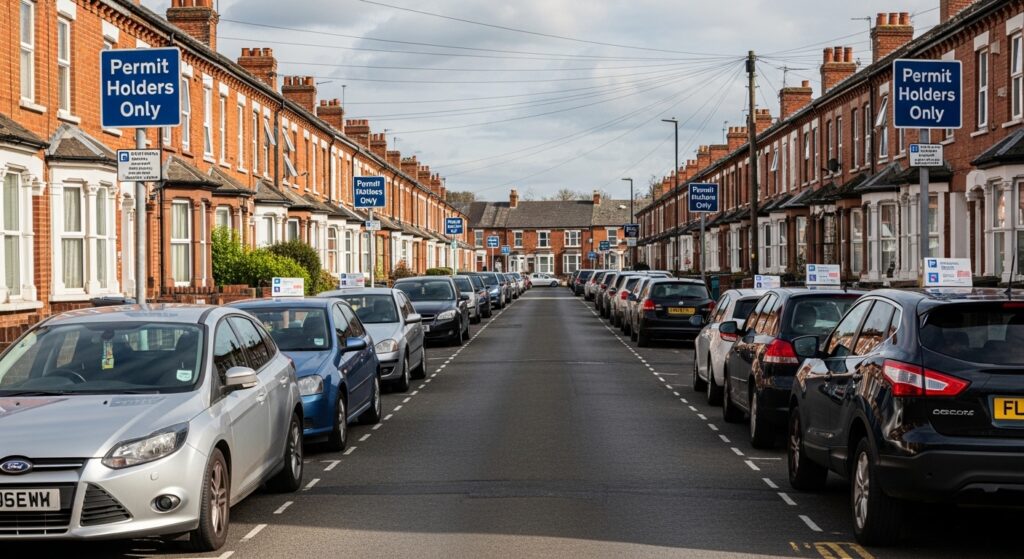
Permit Holders Only Signs
A permit parking sign limits access to authorised vehicles only. These signs protect parking for residents or businesses. Many urban areas use permit systems. The sign clearly shows active hours and zone details. Parking without a valid permit is not allowed.
Councils enforce these rules strictly across residential areas.
Drivers using commercial van livery and signwriting should be extra cautious, as permit violations can affect both fines and brand image. Car park signs in the UK show permit times clearly. Outside these hours, restrictions may change.
Drivers must check the sign carefully. Visitor permits are sometimes required. Parking signs UK exist to manage local demand fairly. Permit zones reduce congestion for residents. Ignoring these signs often leads to penalty notices. Even short stops can result in fines.
A permit parking sign applies even if spaces look empty. Understanding this sign prevents expensive mistakes. Always confirm permit requirements before leaving your vehicle.
Pay and Display Car Park Signs
A pay and display sign explains how the parking payment system works. It tells drivers where and how to pay. These signs show pricing, time limits, and payment methods. UK town centres commonly use pay and display systems.
Drivers must purchase a valid ticket immediately. Displaying the ticket correctly is essential. Many machines now support card or mobile payments. Car park signs explain accepted payment options clearly. Ignoring instructions often results in penalties. Time limits are strictly enforced in these zones. Parking signs UK require drivers to follow all steps. Staying beyond paid time leads to fines. Always check operating hours carefully. Some locations charge only during the daytime. A pay and display sign protects fair parking use. Reading details avoids unnecessary charges.
Time-Limited Parking Signs
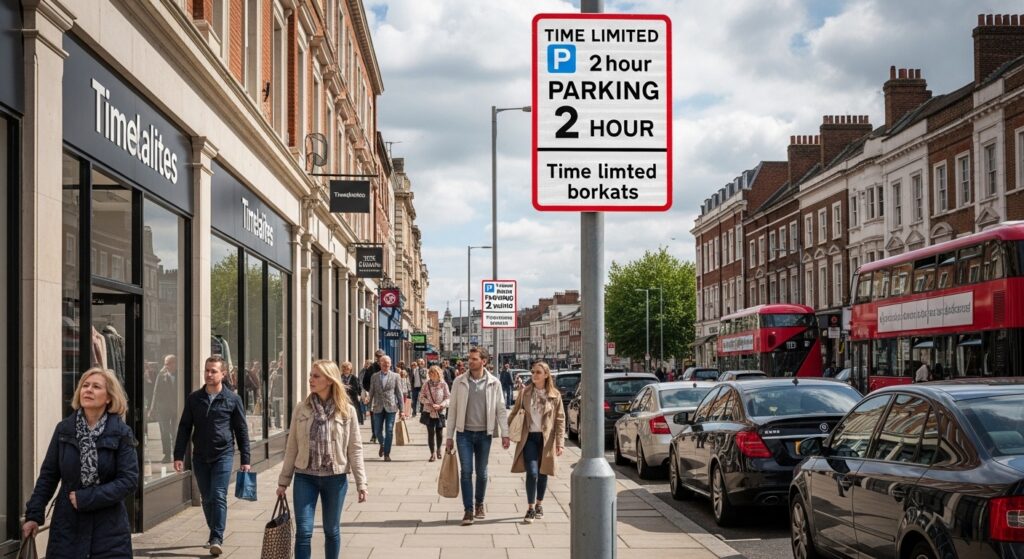
Time limited parking signs control space turnover in busy locations. They allow short stays for quick visits. Common limits include thirty minutes or two hours. These signs always show enforcement times. Outside stated hours, rules may change.
Drivers must read every detail carefully. Car park signs often include no return periods. Returning too soon may result in penalties. Parking signs UK enforce these limits consistently. Time limits support access for more users. They help shops and services remain accessible. Ignoring return restrictions causes frequent fines. Time limited parking improves space availability. Always note your arrival time accurately. Use reminders to avoid overstaying. Understanding these signs prevents accidental violations.
Specialized Parking Signs
Some areas display specialised car park signs with unique rules.
- A disabled parking sign reserves spaces for blue badge holders. Misusing these spaces is illegal and enforced strictly.
- A loading bay sign allows loading during specific times only. Parking there outside the rules can block deliveries.
- An EV charging bay sign reserves space for charging vehicles. Vehicles must actively charge while parked there. UK electric vehicle use continues to grow rapidly. Clear signage ensures fair charger access.
- Fire exit and access routes must remain clear. Parking signs UK protect these essential areas. Ignoring specialised signs leads to higher penalties. Always respect designated-purpose parking spaces.
What Happens If You Break the Rules
Breaking parking rules often results in financial penalties. Enforcement depends on the location and authority involved. Councils issue penalty charge notices regularly. Private operators issue parking charge notices. Car park signs UK explain enforcement clearly. Ignoring them does not remove responsibility.
Fines vary but increase if unpaid. Some private areas allow clamping or towing. Repeated offences may escalate penalties. Parking signs UK provide warnings before enforcement. Reading signs avoids unnecessary disputes. Many drivers pay fines unnecessarily. Understanding rules reduces risk significantly. Enforcement exists to maintain order. Following these signs protects your wallet and time.
Conclusion
Parking signs guide drivers and protect shared spaces. They organise parking fairly across different locations. Car park signs reduce confusion and conflict. Understanding them prevents fines and frustration. Familiarity improves confidence in unfamiliar areas. Parking signs UK follow standard designs for clarity. Learning common signs helps every driver. Taking time to read signs always pays off. Parking becomes easier with knowledge.
For drivers managing business or commercial vehicles, clear commercial vehicle signage, professional vehicle wraps, and compliant van livery and signwriting also play a key role in staying visible while following parking rules.
Common Car Park Sign Questions
Can I park on single yellow lines on weekends?
Single yellow lines often indicate restrictions during certain hours only. Some local authorities allow parking outside controlled times (weekends or evenings), but the exact rules vary by area, always checking nearby signs for specific controlled hours.
What does “no return within 40 minutes” mean?
This means you cannot park again in that same zone within 40 minutes of leaving. It’s designed to prevent drivers from “shuffling” into the same spot repeatedly and occupying spaces beyond the intended turnover period.